
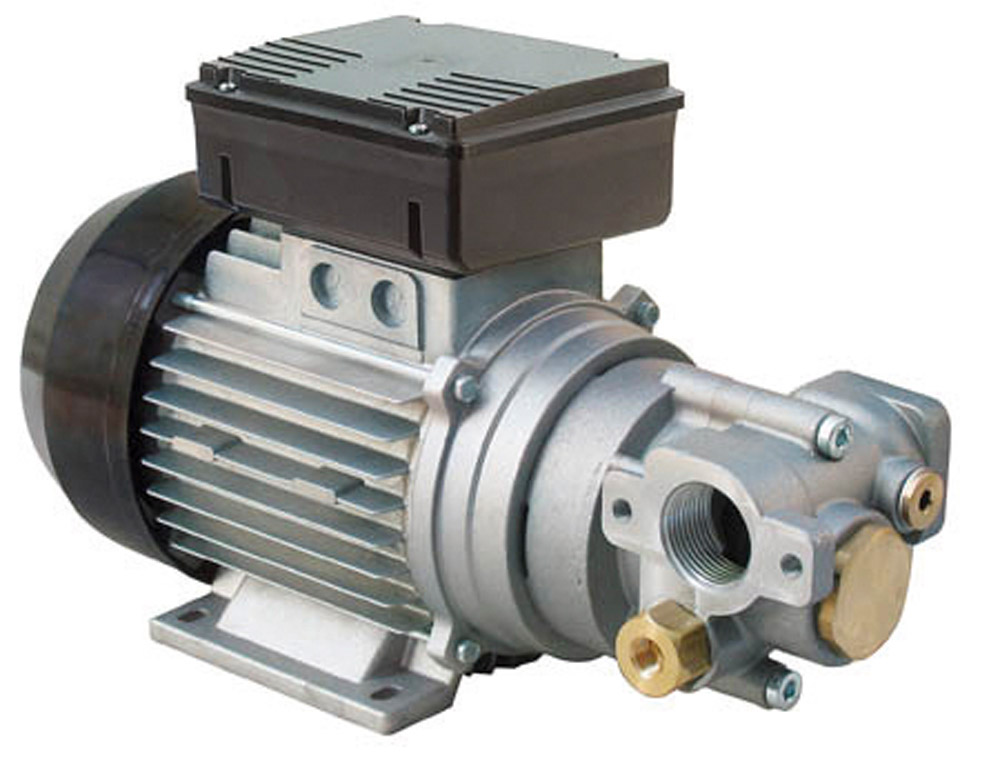
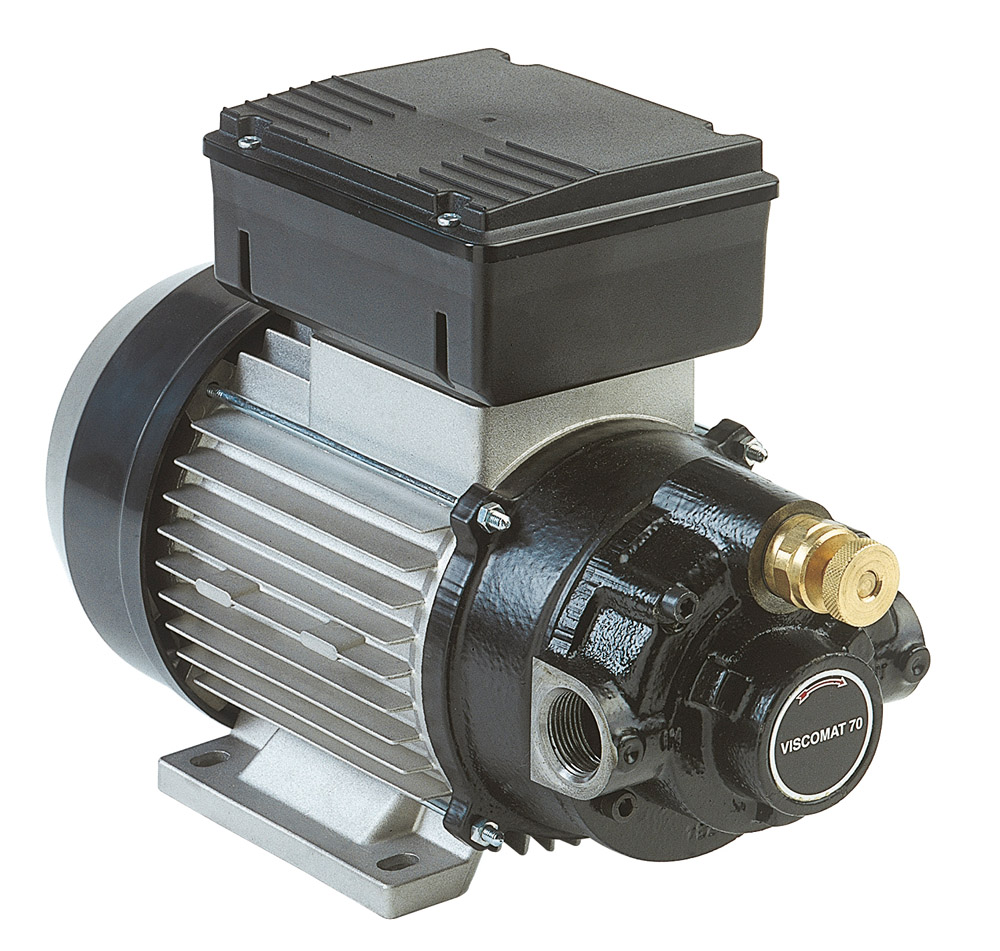
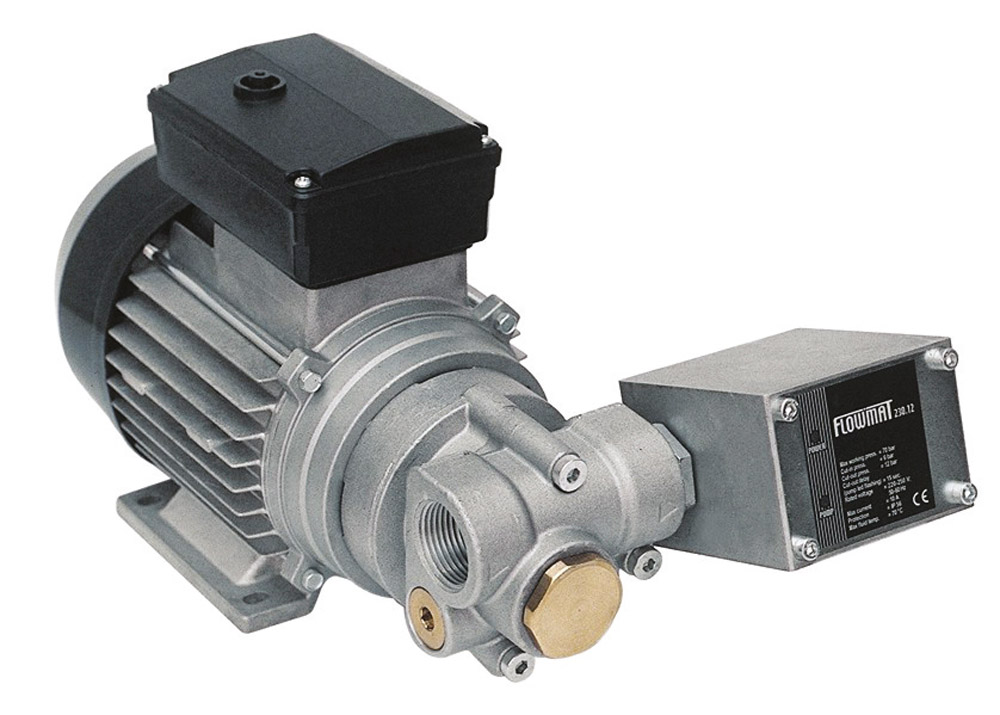

From a technical standpoint, the basic operation of electric pumps is simple:
The electric motor rotates the pumping element (gears or blades).
The pump draws oil from the tank, drum, or cistern through the suction pipe.
The fluid is pushed towards the circuit or container of destination.
The electric pump generally operates continuously, with flow rate and head determined by:
- engine power
- pumping technology
- oil viscosity
- pipe diameter and length
In self-priming versions, the pump is able to prime itself after a few revolutions, even when the suction pipe is not completely full. This allows you to work with moderate differences in height between the suction point and the delivery point and makes an electric self-priming pump particularly practical for transferring liquids from drums, cisterns, or tanks of different heights.
There are various types of self-priming and non-self-priming electric pumps, designed for a range of applications, from mechanical and automotive workshops to hydraulic systems. Among the most common configurations in industrial settings are:
- electric gear pumps
- electric vane pumps
The gear pump for oil transfer is one of the most widely used configurations in industry because:
- ensures regular flow and reduced pulsations
- is ideal for transferring lubricating oil (new or used)
- withstands medium-high viscosities
- Can be used as an electric oil transfer pump on fixed or mobile systems.
This category also includes pumps for HVACR systems or industrial lubrication, where the electric oil pump must overcome high back pressures and operate continuously.
In applications where the fluid has more critical characteristics (oils with specific additives, emulsions, or process fluids), electrical solutions are used that are designed to ensure greater component protection and chemical compatibility. In these cases, electric diaphragm pumps or electric vane pumps with dedicated configurations are used, chosen according to the type of fluid and operating conditions.
Depending on the characteristics of the fluid and the operating conditions of the system, these solutions have specific features that influence the choice:
- separation of fluid from mechanical parts in diaphragm models;
- controlled and regular transfer in paddle models;
- Suitable for systems where greater reliability and chemical compatibility are required.
To choose the most suitable type for the context and application, certain technical parameters must first be evaluated:
- type of oil and chemical compatibility of materials
- flow requirements (l/min), i.e., how many liters of oil need to be moved per minute
- operating pressure (bar/PSI)
- power supply, single-phase (230 V) or three-phase (400 V)
- method of use, sporadic or continuous
To get the most out of an electric oil pump and extend its service life, it is advisable to carry out preventive maintenance to periodically check the condition of gaskets, seals, pipes, and fittings.
To get the most out of an electric oil pump and extend its service life, it is advisable to:
- install it on a stable base, avoiding excessive vibrations;
- use correctly sized pipes and fittings (suction at least equal to the diameter of the pump inlet);
- provide suction filters when the oil may contain particles or residues;
- periodically check the condition of gaskets and seals;
- Check that the liquid is actually compatible with the pump model.
From a security standpoint:
- avoid using the pump with flammable fluids unless expressly specified by the manufacturer;
- respect the indicated temperature limits;
- Protect the motor from overloads using switches and thermal protection devices.
A well-sized, correctly installed, and properly managed electric oil pump becomes a key element for operational continuity, clean maintenance operations, and reduced downtime.